
When Driver Assistance Is Activated: Who Answers for a Crash?
On a Friday night this June, a Tesla Model 3 left a residential street in Katy, Texas, jumped a curb, and tore through the brick wall of a home. Martha Avila, 76, was inside when the car came through the wall. She was flown to a hospital and later died of her injuries. Her daughter posted doorbell video of the crash online. The driver reportedly told investigators that a Tesla automated-driving or driver-assistance feature was engaged.
Public reports do not yet establish which Tesla feature, if any, was actually active or what role it played. But the question the crash raises is one now being litigated in courtrooms across the country: when a car is operated using driver-assistance technology, who answers for the people it hurts? For most of the last decade, the answer was usually the driver. But that may be changing.
A decade of losses, then a breakthrough
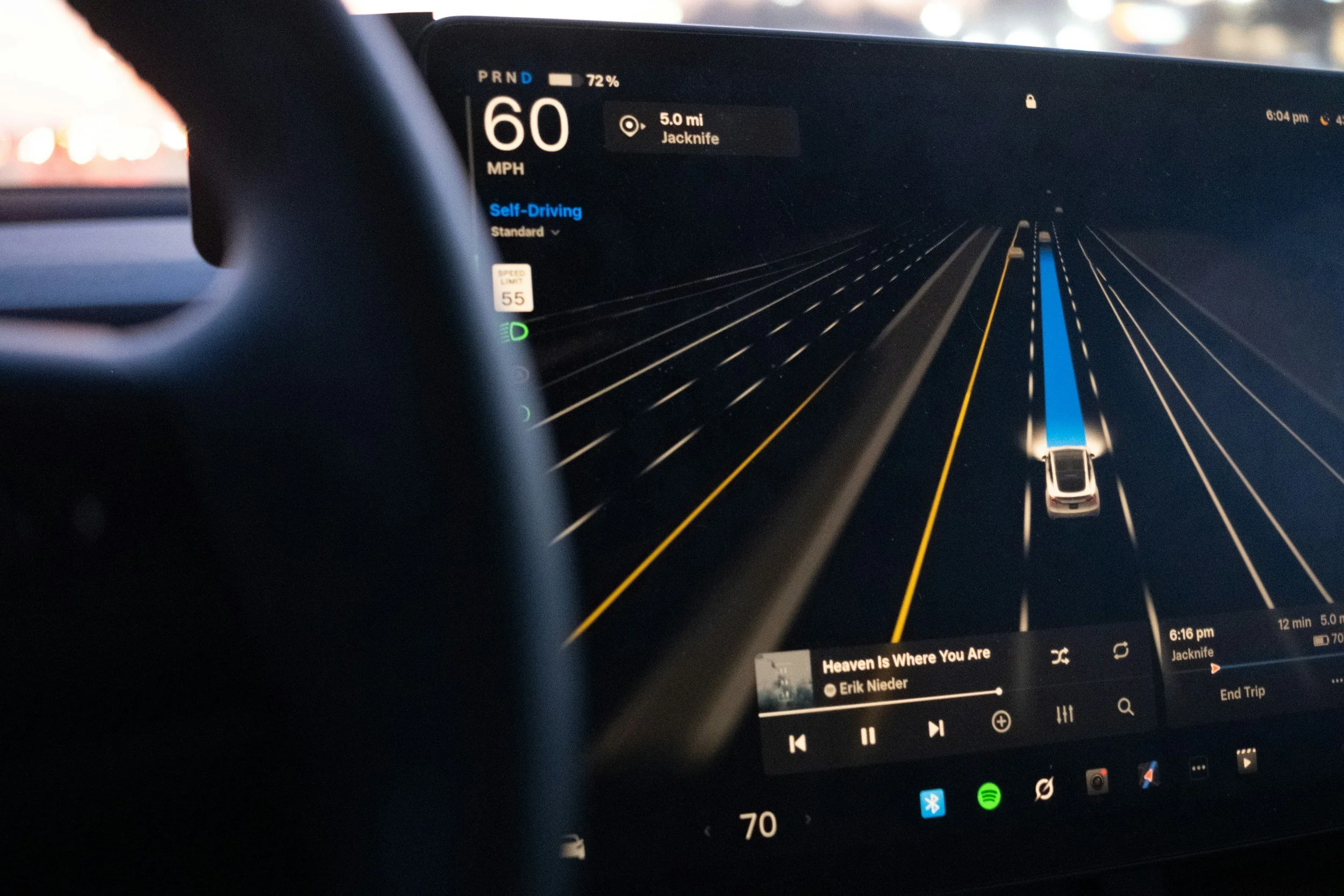
Advanced driver-assistance systems — the Level 2 technology sold as Tesla Autopilot and Full Self-Driving, Ford BlueCruise, and GM Super Cruise — still require a human driver to supervise the car. The systems can steer, brake, and accelerate, but they do not make the vehicle fully autonomous. Tesla warns that Autosteer is a hands-on feature and does not make driving autonomous. Ford BlueCruise and GM Super Cruise allow hands-free driving on approved roads, but they still require the driver to watch the road and be ready to take over. That design gives manufacturers a powerful defense: whatever the technology did, a human was supposed to be supervising.
For years, that defense had force. According to public reporting, Tesla won the first two Autopilot cases to reach a jury. In 2023, a Los Angeles jury rejected a design claim over a curb-strike injury, crediting Tesla's warnings and blaming a distracted driver. Later that year, the first reported fatal Autopilot case to reach trial ended in a defense verdict. Other cases have settled before trial or verdict.
Then came Benavides v. Tesla. On August 1, 2025, a federal jury in Miami returned the first reported verdict holding Tesla liable in an Autopilot death case. The crash that gave rise to the case happened in Key Largo in 2019: a Model S on Autopilot went through a T-intersection at roughly 62 miles per hour while the driver bent down for a dropped phone, killing 22-year-old Naibel Benavides Leon and gravely injuring her companion. The jury found Tesla 33% at fault, awarded $129 million in compensatory damages before apportionment, and added $200 million in punitive damages. After applying Tesla’s share of fault to the compensatory award, the verdict exposed Tesla to about $243 million. Tesla said it would seek post-trial relief and appeal.
Benavides did not just produce a large number. It gave plaintiffs a potential roadmap for pursuing design-defect and failure-to-warn claims involving advanced driver-assistance technology. Because the case was tried in federal court in Florida and applied Florida law, lawyers in Florida, Georgia, and Alabama have reason to watch whether it becomes a durable model for future driver-assistance litigation. Whether it ultimately serves as that template may depend on the outcome of any appeal and how later courts address similar claims.
How plaintiffs may try to win these cases
It is still early days, but the strongest plaintiff theories appear to focus on design and marketing claims. The core theory is that the driver-assistance system was defectively designed because it let a driver switch it on in places where plaintiffs say it could not safely operate — including cross-traffic intersections and undivided roads — and did too little to confirm the driver was actually paying attention. Plaintiffs pair that theory with failure-to-warn claims, and then add the feature that makes these cases dangerous to defendants: the marketing. The names "Autopilot" and "Full Self-Driving," and public claims that the cars drive more safely than humans, are offered as proof that the company encouraged the very overreliance that leads to crashes. In Benavides, public reporting indicates that plaintiffs relied on a staged 2016 promotional video and "safer than human" messaging as part of their punitive-damages case.
Why venue matters
Where a case is filed matters a great deal, because Florida, Georgia, and Alabama treat product-liability claims and driver fault differently.
Florida gives plaintiffs room to frame a design-defect claim under more than one theory, and its comparative-fault statute expressly applies to products-liability actions. That matters because a driver’s fault generally reduces damages rather than automatically barring recovery, unless the plaintiff’s percentage of fault crosses Florida’s statutory threshold. That is the law behind the only plaintiff’s verdict so far.
Georgia may present a different path. Design cases generally turn on a risk-utility analysis, and comparative fault can reduce or bar recovery depending on the fault allocation. Georgia also treats punitive damages differently in product cases: the general cap may not apply, but a large share of a punitive award may be paid to the state.
Alabama is tougher for plaintiffs who personally contributed to the crash. It retains contributory negligence, which can bar recovery if the plaintiff's own negligence contributed to the injury. That rule may be decisive when the plaintiff is the distracted driver. It may not defeat claims by an innocent passenger, pedestrian, homeowner, or estate unless the defendant can prove that plaintiff's own fault. Venue therefore can change the case, but the outcome still depends on who is suing, what claims are pleaded, and what defenses are proved.
What to watch
One verdict is not a trend. If Tesla's appeal proceeds, it will test whether Benavides was a turning point or an outlier. Other pending cases will test the same issue. And as true driverless vehicles spread, the law will have to decide how liability shifts when there is no human driver to blame at all.
This article is for general information and is not legal advice. Reading it does not create an attorney-client relationship.